

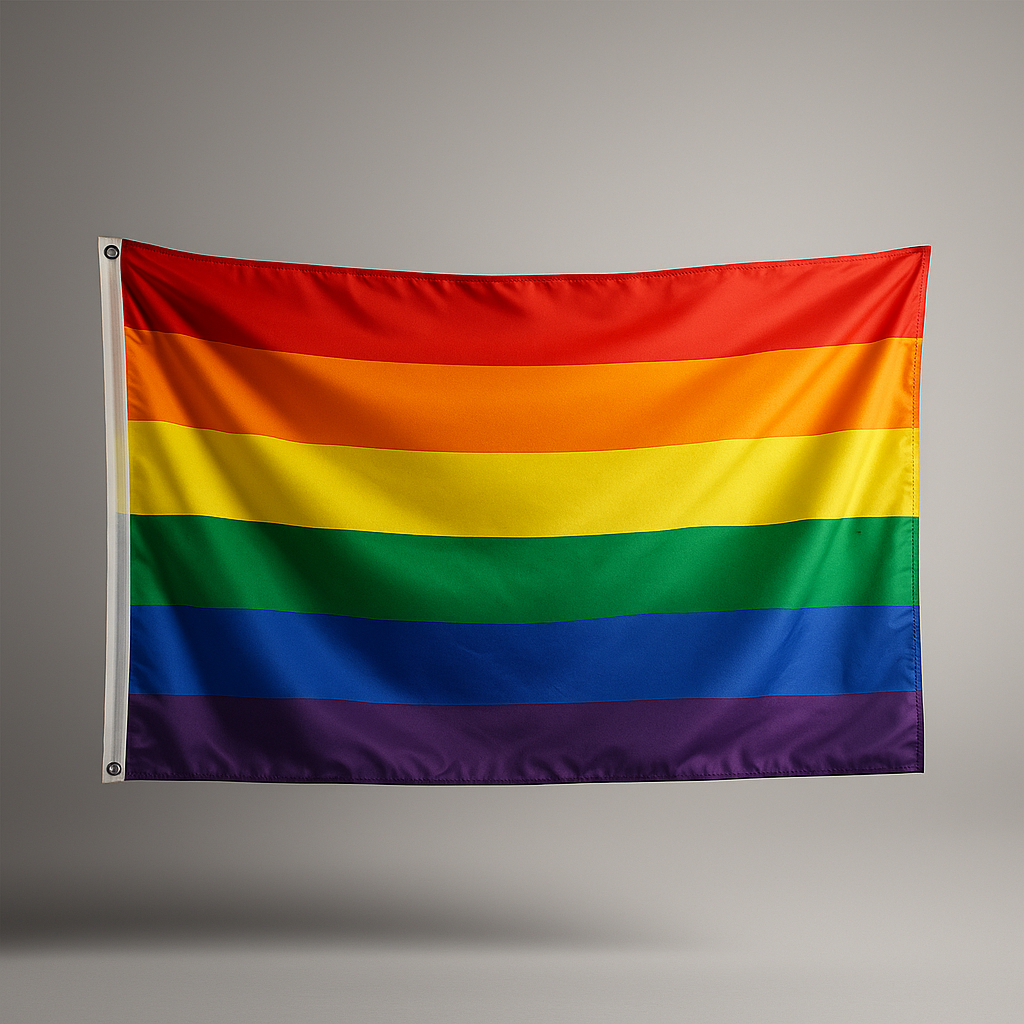
A Complete Guide To Pride Flags
Walk down the street in almost any major US city during June, and you will see them: vibrant, waving bursts of color adorning storefronts, porches, and lapels. But the Pride flag is far more than just a seasonal decoration. It is a powerful symbol of resilience, a beacon of safety, and a declaration of existence.
For the LGBTQIA+ community and allies, these flags represent a history of fighting for the right to love and be loved. However, with so many variations and an ever-evolving spectrum of identities, it can be difficult to keep track of the nuances. You might find yourself asking: Why is the pride flag a rainbow? What do the specific colors mean? And what exactly is the Progress Flag?
At Pride Stance, we believe that understanding our history is the first step in celebrating our future. Whether you are looking to educate yourself, be a better ally, or find the perfect piece of jewelry to represent your truth, this complete guide covers everything you need to know about the flags that unite us.
What Is a Pride Flag?
At its core, a pride flag is a vexillological symbol used to represent a specific gender identity or sexual orientation within the LGBTQIA+ community. While the "Rainbow Flag" is the most universally recognized umbrella symbol, there are dozens of specific flags representing the diverse tapestry of the queer experience.
These flags serve multiple purposes:
- Visibility: They signal to others that you are a safe person or a member of the community.
- Solidarity: They unify people across different geographic and cultural divides.
- Celebration: They are a joyful rejection of the shame that society has historically tried to impose on LGBTQIA+ individuals.
When you wear a pride flag, whether on a t-shirt or through a subtle piece of Pride Stance jewelry, you are participating in a global conversation about human rights and love.
The Origin Story: When Was the Pride Flag Made?
To understand the flag, we have to travel back to San Francisco in the late 1970s.
In 1978, Harvey Milk, the first openly gay elected official in California, challenged an artist and activist named Gilbert Baker to create a positive symbol for the community. Baker, an Army veteran who taught himself to sew, was inspired by the concept of the rainbow as a natural flag from the sky.
Why is the pride flag a rainbow? Baker saw the rainbow as the perfect metaphor for the LGBTQ+ community: diverse, beautiful, natural, and encompassing a spectrum of light. The very first flags were hand-dyed and stitched by Baker and a team of volunteers in the attic of a gay community center in San Francisco. They debuted at the San Francisco Gay Freedom Day Parade on June 25, 1978.
Decoding the Colors: What Do They Mean?
Most people know the standard six-stripe flag (Red, Orange, Yellow, Green, Blue, Violet). However, Gilbert Baker's original 1978 design actually featured eight stripes. Each color was assigned a specific meaning to capture the essence of humanity.
The Original 8-Stripe Meanings:
- Hot Pink: Sex
- Red: Life
- Orange: Healing
- Yellow: Sunlight
- Green: Nature
- Turquoise: Magic/Art
- Indigo: Serenity
- Violet: Spirit
Why Did It Change to Six Stripes?
The shift from eight stripes to the modern six was purely practical. After the assassination of Harvey Milk in late 1978, demand for the flag skyrocketed. The Paramount Flag Company began manufacturing them, but the hot pink fabric was too rare and expensive to mass-produce. So, the pink stripe was dropped.
Later, in 1979, the flag was modified again. When hung vertically from lamp posts in San Francisco, the center stripe was obscured by the post itself. To fix this, turquoise was dropped, and indigo was changed to royal blue, resulting in an even number of stripes (six). This created the version most of the world recognizes today: Red, Orange, Yellow, Green, Blue, and Violet.
Evolution of a Symbol: What Is the Progress Flag?
Language evolves, society evolves, and so do our symbols. While the six-stripe rainbow is iconic, many in the community felt it didn't fully acknowledge the specific struggles of marginalized groups within the LGBTQIA+ umbrella, specifically people of color and transgender individuals.
Enter the Progress Pride Flag. Designed in 2018 by non-binary artist and designer Daniel Quasar, this flag is a reboot of the classic rainbow. It retains the six-stripe rainbow background but adds a chevron (an arrow shape) on the left side pointing to the right.
The Meaning of the Chevron:
The arrow points forward to show that while we have made progress, there is still work to be done. The chevron includes five new stripes:
- Black and Brown: These represent LGBTQIA+ communities of color (Black and Latinx), who have historically been at the forefront of the pride movement (think Marsha P. Johnson and Sylvia Rivera) but are often underrepresented in mainstream pride media. The black stripe also serves as a memorial to those lost to and living with HIV/AIDS.
- Light Blue, Pink, and White: These are the colors of the Transgender Pride Flag, explicitly centering trans, non-binary, and gender-nonconforming individuals who continue to face significant legislative and social hurdles in the US and abroad.
The Progress Pride Flag has rapidly become the standard for modern inclusivity, signaling an intersectional approach to advocacy.
Beyond the Rainbow: Other Flags You Should Know
While the Rainbow and Progress flags are the "umbrella" symbols, there are specific flags for almost every identity. Recognizing these flags is a great way to show specialized support. Here are a few prominent ones:
The Transgender Flag
Created by Monica Helms in 1999, this flag features light blue (traditional color for baby boys), pink (traditional color for baby girls), and white in the center for those who are transitioning, intersex, or consider themselves having a neutral or undefined gender.
The Bisexual Flag
Designed by Michael Page in 1998, this flag features a broad pink stripe (same-sex attraction) at the top, a broad blue stripe (opposite-sex attraction) at the bottom, and a narrower purple stripe (blending the two) in the middle.
The Lesbian Flag
There have been several iterations, but the "Sunset Flag" is currently the most widely accepted. It features shades of orange, white, and pink, representing gender non-conformity, independence, community, and unique relationships to womanhood.
The Non-Binary Flag
Created by Kye Rowan in 2014, this flag consists of yellow (gender outside the binary), white (multigender people), purple (combining male and female), and black (agender/without gender).
Wearing Your Pride: From Flags to Fine Jewelry
While waving a flag at a parade is a powerful feeling, we can't always carry a 3x5 foot piece of fabric with us to work, school, or formal events. This is where Pride Stance steps in.
We believe that your identity shouldn't be something you only celebrate once a year. It is a daily reality, a source of strength, and a pillar of who you are. That is why we have translated the vibrant history of these flags into high-quality, wearable art. We have also created a range of unique pride flags, for further self expression.
Quality That Matches Your Values
Just as the flag has evolved to be more inclusive, the industry needs to evolve to be more ethical. At Pride Stance, we are committed to:
- Ethical Sourcing: In 2026, a brand's values matter just as much as its aesthetics. For the LGBTQIA+ community, awareness of inequality and human rights is not abstract — it's lived experience. Pride should never come at the cost of exploitation, which is why we're intentional about the partners we choose to work with.
- Durability: Our jewelry is handcrafted using hypoallergenic and tarnish-resistant materials. Whether you are wearing the Inclusion Necklace or a subtle Pride Ring, it is designed to last, just like the community it represents.
- Community Support: We are more than a brand; we are a support system. We provide 24/7 community support resources and mental health directories for the US and beyond, ensuring that if you wear our jewelry, you never have to feel alone.
Jewelry allows for a subtle yet profound declaration of self. A ring featuring the Trans colors or a necklace bearing the Progress rainbow serves as a personal reminder of your resilience and a signal to others that you are an ally or a member of the family.
Conclusion: A Symbol of Unending Hope
From the first hand-stitched stripes in 1978 to the intersectional design of the Progress Flag today, the pride flag remains a living, breathing symbol. It tells a story of where we have been, the friends we have lost, the battles we have won, and the future we are building together.
Whether you fly the flag on your front porch or wear it close to your heart in the form of a necklace, you are keeping that history alive. You are stating, unequivocally, that love is love, and that you are proud of who you are.
Ready to wear your colors?
Explore our collection of handcrafted, ethically sourced pride jewelry. From the Pillar Strength Necklace to our extensive range of inclusive merchandise, find the piece that speaks to your journey.
Read more
A Guide To Pride Merch in 2026: Everything You Need To Know
Welcome to 2026. The landscape of LGBTQIA+ expression has evolved beautifully over the last few years. While the vibrant parades of June remain a staple of our culture, the way we express our ident...
Read more
Top LGBTQIA+ Gift Ideas: Meaningful Presents for Every Identity
Finding the perfect gift is an art form. It’s about more than just wrapping paper and bows; it is a tangible way to say, "I see you, I love you, and I celebrate who you are." When it comes to shopp...
Read more